A common mistake we see from contractors across the West Valley is treating all desert ground as uniformly competent gravel. In Peoria Arizona, the subsurface can flip from well-graded alluvium to collapsible silty sand within a hundred feet, and a footing sized for one will sink into the other. That assumption error shows up months after occupancy as slab cracks and racked door frames. Our team steps in before excavation, running site-specific borings per ASTM D1586 and building a bearing capacity model that respects the actual stratigraphy beneath the parcel. We then size the shallow foundation elements so the geotech report moves through Peoria plan check without revision cycles. For projects where near-surface soils are too erratic for conventional spread footings, we often evaluate mat foundations as a stiffer alternative that bridges soft lenses without switching to deep foundations.
In Peoria's desert soils, the difference between a working footing and a cracked slab often comes down to one number: collapsible potential under the design load.
Methodology applied in Peoria Arizona
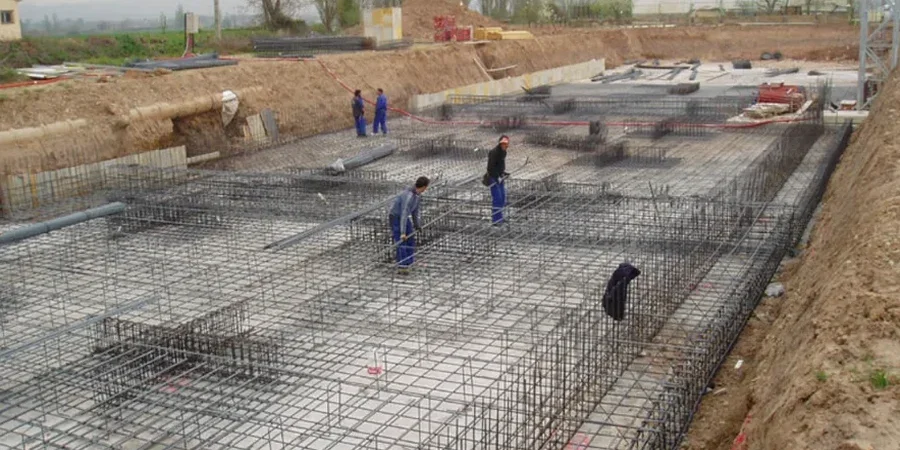
Field demonstration
Typical technical challenges in Peoria Arizona
In Peoria Arizona, we often see foundation plans that assume Site Class C across the entire lot, but a single boring hitting loose sand in the upper 10 feet can push the classification to Site Class D under ASCE 7, which raises the design spectral accelerations by 20 to 30 percent. That change ripples through the lateral system and the footing sizes, and catching it after the structural drawings are stamped means a costly resubmittal. Expansive clay is less common here than in Scottsdale, but some parcels near the Agua Fria River corridor still test out at PI values above 15, triggering the need for moisture-conditioned subgrade or an under-slab vapor barrier to control heave. The other risk we flag early is scour: if the building is within the FEMA floodplain or a mapped alluvial fan, the shallow foundation must be buried below the calculated scour depth, which can push the footing two or three feet deeper than the architect originally assumed.
Our services
Our shallow foundation design activities in Peoria Arizona cover the full path from subsurface investigation to a stamped, permit-ready geotechnical report. We handle the boring program, the lab testing, and the engineering calculations under one scope so there is no finger-pointing between the driller and the engineer.
Spread Footing Design
Bearing capacity and settlement analysis for isolated and strip footings, sized per IBC 1806 with local soil parameters from SPT borings and lab shear tests.
Mat Foundation Evaluation
Stiffness and pressure-distribution modeling for slab-on-grade and mat foundations, including subgrade modulus derivation for structural input and long-term settlement checks.
Peoria Plan Check Support
Response letters, revised calculations, and phone conferences with City of Peoria reviewers to close out geotechnical comments without delaying the permit.
Top questions
What is the typical cost for a shallow foundation design report in Peoria?
For a single-family or small commercial parcel in the Peoria area, the geotechnical investigation and foundation design report typically runs between US$1,830 and US$3,390, depending on the number of borings, lab testing scope, and whether a special inspection program is required.
How deep do footings need to be in Peoria Arizona?
The IBC prescribes a minimum 12-inch embedment below finished grade for protection against frost and erosion. However, if the site is in a FEMA flood zone or alluvial fan, the bottom of footing must extend below the calculated scour depth, which can require 24 to 36 inches of embedment depending on the hydraulic study.
When does a Peoria project need a mat foundation instead of spread footings?
We recommend a mat foundation when the allowable bearing pressure drops below 1,500 psf, differential settlement between columns exceeds 0.5 inch, or the site contains pockets of collapsible soil that cannot be economically over-excavated. The mat bridges soft zones and reduces the risk of angular distortion in the superstructure.