When you are building near the Agua Fria River or into the desert basins of Peoria, you quickly realize that dry sand can be just as problematic as saturated soil. In this part of the Salt River Valley, the deep alluvial deposits mask a real seismic threat: liquefaction potential. We run into projects every month where standard SPT data is insufficient to rule out cyclic mobility, especially when the water table sits higher than expected. A proper CPT test quickly becomes essential for measuring the actual in-situ behavior of these granular layers, allowing us to calibrate the cyclic stress ratio with precision rather than relying on correlations that fall short in interbedded formations.
In Peoria’s alluvial basins, ignoring seismic settlement in unsaturated sand is as risky as ignoring flow liquefaction below the water table.
Methodology applied in Peoria Arizona
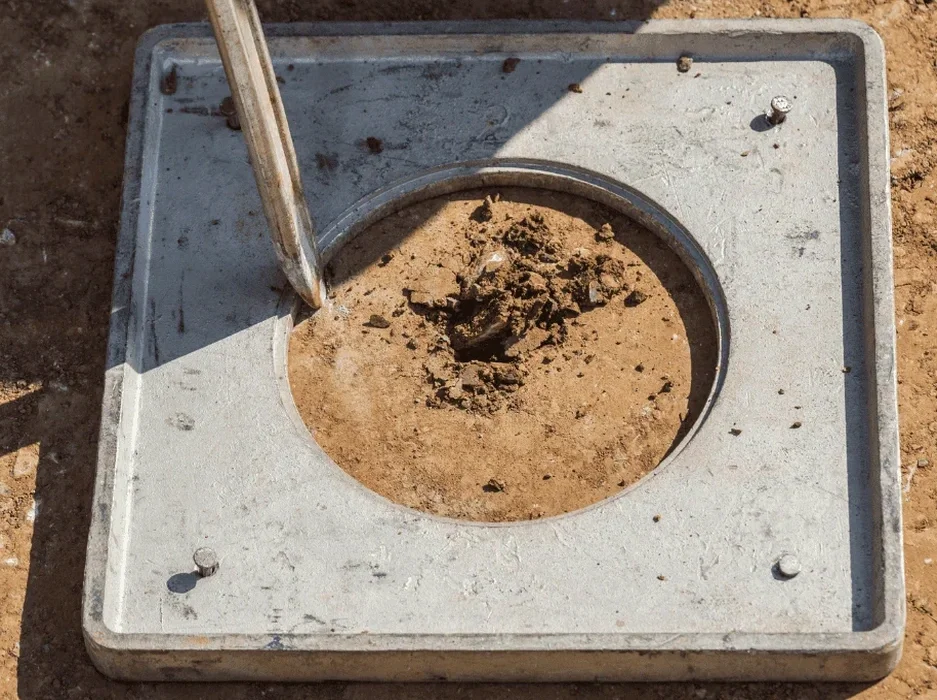
Typical technical challenges in Peoria Arizona
The most deceptive risk in Peoria isn’t the towering wave of a tsunami but the silent settlement of dry sand. Even above the water table, loose granular soils can compact under seismic shaking, a phenomenon known as “seismic settlement” that can fracture slabs and utilities before you even see a crack in the wall. Then there is the monsoon factor: the summer storms can artificially raise the groundwater table temporarily, turning a theoretically safe site into a liquefiable one during the exact season when distant earthquakes are statistically possible. Skipping a rigorous analysis here means you are gambling on the water table staying low forever. If your foundation sits on a loose sand layer that densifies, differential settlement will tear the structure apart slowly long after the shaking stops.
Our services
We tailor the liquefaction assessment to the specific structural demands of your project, moving beyond a simple “pass/fail” report to offer actionable mitigation parameters.
Cyclic Triaxial & Laboratory Testing
We sample undisturbed specimens from critical layers to run stress-controlled cyclic triaxial tests. This gives us the Cyclic Resistance Ratio (CRR) directly, eliminating the uncertainty of empirical SPT/CPT correlations when dealing with silty sands common in the Peoria basin.
Post-Liquefaction Settlement & Ground Improvement
We calculate the expected volumetric strain and vertical settlement using the Zhang et al. (2002) method, helping structural engineers design rigid inclusions or stiffened mats. If mitigation is required, we specify the right technique, from deep dynamic compaction to stone columns.
Top questions
Does Peoria really need a liquefaction assessment if the site is mostly dry?
Yes. The IBC requires it for Seismic Design Categories C and higher. Even if the groundwater is deep, loose sands can undergo seismic settlement (dry sand compaction). We evaluate both flow liquefaction and cyclic mobility to ensure the foundation soil meets the performance criteria.
What is the typical cost range for a soil liquefaction analysis in Peoria?
A comprehensive analysis, including field testing and the engineering report, typically falls between US$2,180 and US$3,580 depending on the depth of the investigation and whether advanced lab testing like cyclic triaxial is required.
How deep do you need to investigate for liquefaction potential?
We generally investigate to a depth of 50 feet or until we hit competent geologic material, whichever is deeper. Liquefaction in the Peoria basin is typically most critical within the upper 30 to 40 feet where loose Holocene alluvium is present.
What happens if my site fails the liquefaction analysis?
A “failure” simply means the Factor of Safety is below 1.2. This does not stop the project; it triggers a mitigation design phase. We calculate the post-liquefaction settlement and work with your structural team to implement ground improvement, such as stone columns or deep soil mixing, to densify the problematic layer.