Peoria’s expansion north toward Lake Pleasant and west along the Loop 303 corridor has opened ground that shifts between desert pavement, cemented caliche ledges, and deep alluvial fans draining the Hieroglyphic Mountains. The city added over 40,000 residents in the last fifteen years, pushing residential subdivisions and commercial pads onto slopes where cut depths regularly exceed 15 feet. Our team sees the same pattern on most sites: hardpan that drills like rock for three feet, then abruptly transitions to poorly graded sand with cobbles. That sequence makes open-cut behavior hard to predict from boreholes alone. We run continuous monitoring arrays during bulk excavation so crews know the moment a bench starts creeping. The data feeds directly into the shoring contractor’s daily huddle, not a report that sits on a server. In the northern reaches near the New River, we often pair this with deep excavation instrumentation when utility trenches pass below the seasonal water table.
In Peoria’s caliche-and-sand profile, most movement starts as a 0.1-inch creep that triples overnight — the wireless network catches it before it becomes a bench failure.
Methodology applied in Peoria Arizona
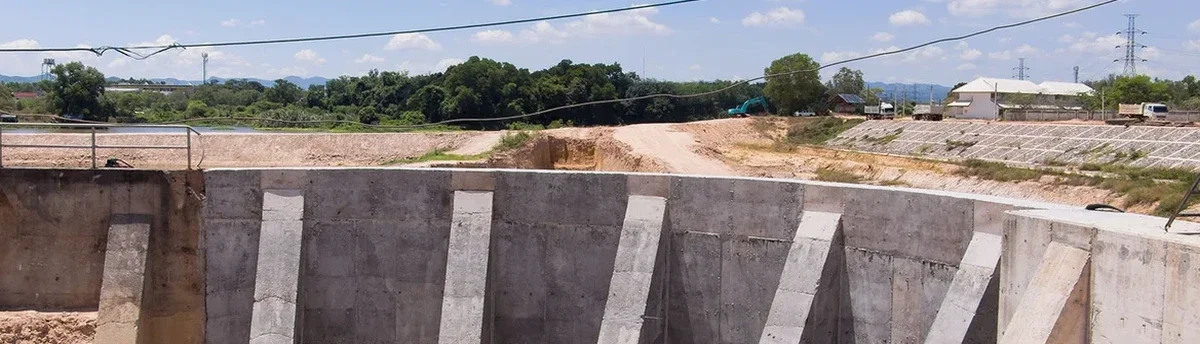
Typical technical challenges in Peoria Arizona
The contrast between Peoria’s bone-dry summers and the monsoon downpours that hit between July and September creates a risk window that catches out-of-town contractors by surprise. A vertical cut that stands perfectly stable at 2% moisture can lose 40% of its cohesion after one overnight storm saturates the silty sand lenses tucked between caliche stringers. We have seen benches spall within eight hours of a two-inch rainfall event. The other local hazard is cobble roll: rounded granite cobbles up to 18 inches in diameter that sit loose in the alluvial matrix and release without warning when fine material washes out around them. Our monitoring protocol adds extra piezometer readings within 24 hours after any storm exceeding 0.5 inches, and the tiltmeter alert threshold tightens to 0.15 inches during the monsoon period. That operational rhythm keeps the excavation crew ahead of the ground rather than reacting to it.
Our services
Our Peoria excavation monitoring work follows a two-phase approach: real-time field instrumentation during the cut cycle, and periodic engineering review that interprets the trend lines and recommends adjustments to shoring or slope angle. Both phases run under the same project dashboard so the superintendent and the geotechnical engineer see identical data.
Real-Time Slope and Groundwater Monitoring
Wireless tiltmeter networks, vibrating-wire piezometers, and robotic total station tracking deployed on active cut faces across Peoria. We set threshold alerts that notify the site team by text, and we station a technician on site during the first 48 hours after each bench is cut to verify sensor response against manual readings.
Post-Excavation Stability Review
Weekly trend reports that plot displacement versus time, rainfall, and construction activity. When a slope enters the warning zone, we issue a same-day recommendation memo with specific slope-angle or shoring adjustments referenced to IBC Chapter 33 and the project’s geotechnical baseline report.
Top questions
How much does excavation monitoring cost for a typical Peoria residential cut?
For a single-family subdivision lot with a 10–15 ft cut, monitoring typically runs between US$800 and US$2,150 depending on the number of sensors and the duration of the excavation cycle. A two-week program with four tiltmeters and one piezometer falls at the lower end; adding total station tracking and a full monsoon-season watch pushes it toward the upper range.
Do you install monitoring before or after the cut starts?
We prefer to install inclinometer casing and piezometers in boreholes drilled at the bench crest before the mass excavation reaches that elevation. Tiltmeters and prism targets go in once the cut face is trimmed. If we arrive mid-cut, we can still backfit sensors, but we lose the baseline reading from undisturbed ground.
What triggers an alert on your monitoring system?
The default displacement threshold is 0.25 inches of cumulative movement in 24 hours for any single tiltmeter or prism target. During monsoon season we tighten that to 0.15 inches. Piezometer alerts fire if pore pressure rises more than 2 psi above the baseline established during dry conditions.
How do you handle false alarms from equipment vibration or wildlife?
Every alert gets a manual review within 30 minutes. Our dashboard overlays time-stamped site photos and weather data, so we can quickly distinguish a real slope movement from a coyote knocking over a stake or a compactor vibrating a prism mount. We do not escalate to the superintendent until we have confirmed the signal is ground-related.
Is the monitoring data accepted by Peoria building officials?
Yes. We format all reports to align with IBC Chapter 33 requirements and the geotechnical special inspection provisions in the city’s adopted building code. The daily logs and weekly trend charts become part of the project record and are routinely submitted to the deputy building official during excavation-phase inspections.